
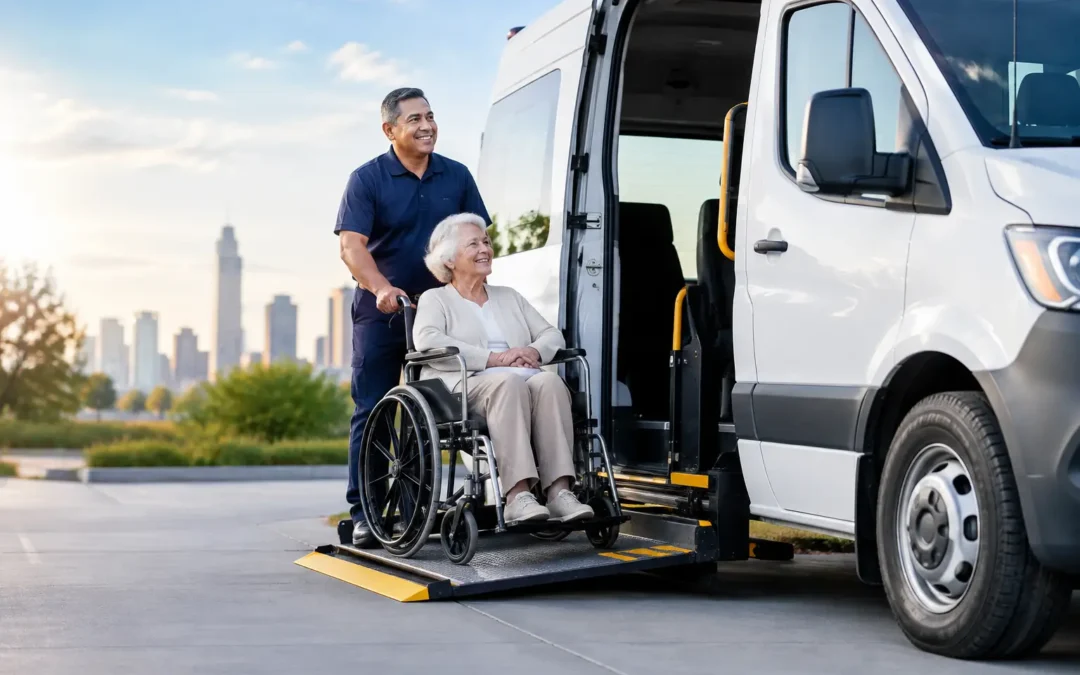
A missed dialysis pickup, a wheelchair securement claim, or a serious accident with a passenger onboard can put an NEMT operation under immediate pressure. Truck insurance for NEMT is not a standard commercial auto purchase. It must account for passenger exposure, accessible equipment, contracted transportation requirements, driver controls, and the real cost of taking a vehicle out of service.
For NEMT operators, the cheapest quote is rarely the right benchmark. The policy has to satisfy the requirements of your state, county, broker, managed-care organization, facility contracts, and vehicle lender while protecting the operation when something goes wrong. A coverage gap can cost more than a claim. It can cost a contract, credentialing approval, or the ability to keep vehicles on the road.
Why NEMT Insurance Requires a Different Approach
Non-emergency medical transportation is commercial transportation, but its risk profile is different from general delivery or freight hauling. Drivers may assist elderly riders, passengers with mobility limitations, patients leaving treatment, and people using wheelchairs or stretchers. Routes may be short, but they can involve frequent stops, tight facility entrances, loading zones, and repeated passenger loading and unloading.
That changes the underwriting conversation. An insurer will want to know whether you operate sedans, minivans, wheelchair-accessible vans, minibuses, or stretcher-equipped vehicles. They will also look at passenger capacity, service territory, annual mileage, driver experience, claims history, inspection procedures, and whether drivers provide hands-on assistance beyond curb-to-curb transportation.
The answer to those questions affects both eligibility and price. A carrier that is comfortable insuring a local medical transportation fleet may not have the appetite for long-distance trips, high passenger counts, or operations involving stretcher transport. Clear, accurate details upfront help prevent delays, exclusions, and unpleasant surprises after a loss.
Core Truck Insurance for NEMT Coverage
Commercial auto liability is the foundation of an NEMT policy. It responds when your driver is legally responsible for bodily injury or property damage in an accident. Because passengers are in the vehicle, many NEMT contracts require liability limits above the minimum mandated by state law. A $1 million combined single limit is common in commercial transportation, but your required limit depends on where and how you operate.
Physical damage coverage protects owned vehicles from collision, theft, vandalism, fire, and certain weather-related losses, subject to the policy terms and deductible. For a wheelchair van, physical damage limits should reflect the actual value of the completed unit, including lifts, ramps, securement systems, and other permanently installed accessibility equipment. Insuring only the chassis value can leave a major shortfall after a total loss.
Uninsured and underinsured motorist coverage deserves careful attention. If another driver causes an accident and does not carry enough insurance, this coverage may help address qualifying injuries to your driver or passengers, depending on the state and policy form. Medical payments coverage or personal injury protection may also be required or available, but the structure varies significantly by state.
A commercial auto policy does not automatically cover every business exposure. General liability can address certain third-party injury or property damage claims that occur away from the vehicle, such as a slip-and-fall at your office. Professional liability may be relevant when contracts impose service-related obligations. Workers’ compensation is generally needed for employees injured on the job, and hired and non-owned auto coverage can matter if staff use rented or personally owned vehicles for business.
If your operation stores patient data, dispatches through a digital platform, or maintains protected health information, cyber liability should also be evaluated separately. Insurance should follow the way the company actually operates, not just the type of vehicle listed on the policy.
Contract Requirements Can Drive the Policy
Many NEMT businesses obtain trips through transportation brokers, Medicaid-related programs, hospitals, rehabilitation centers, senior communities, or managed-care organizations. These entities often require proof of insurance before they will activate a provider or release trip assignments.
Certificates of insurance may need to show specified liability limits, additional insured wording, waiver of subrogation, or other contract language. Those requirements should be reviewed before binding coverage. A certificate cannot create coverage that the policy does not provide, and adding an endorsement after the fact can take time or change the premium.
This is where fast policy servicing matters. When a new facility asks for a certificate, the request may be tied to immediate work. A specialist should confirm the request matches the actual policy and help avoid certificate language that creates obligations your insurer has not accepted.
Do Federal Trucking Filings Apply?
Not every NEMT operator needs FMCSA filings, a BMC-91X filing, or an MCS-90 endorsement. Those requirements are tied to specific interstate motor carrier operations and federal financial-responsibility rules. Local NEMT transportation is often governed primarily by state, county, municipal, Medicaid, or contract requirements.
However, the details matter. Crossing state lines, transporting certain passenger loads, operating under particular authority, or expanding into other commercial transportation services can change the compliance picture. Do not assume that a filing used by a freight carrier applies to NEMT, and do not assume it is unnecessary simply because your trips are usually local. Verify the requirements for your operation before you accept work.
What Insurers Review Before Quoting
Underwriters are looking for evidence that the operation manages passenger and vehicle risk consistently. New ventures can still obtain coverage, but they should expect more questions, tighter underwriting, and potentially higher premiums than an established fleet with documented controls.
A complete submission typically includes driver lists and motor vehicle records, vehicle identification numbers, garaging addresses, loss runs if available, expected passenger counts, service radius, annual mileage, and a description of services. A vague description such as “medical rides” can slow the process. State whether trips are ambulatory, wheelchair, bariatric, or stretcher-related, and whether drivers assist with loading, securement, or door-through-door service.
Insurers also pay close attention to driver hiring and training. A written process for license verification, motor vehicle record review, ride-alongs, defensive-driving instruction, wheelchair securement training, incident reporting, and post-accident testing demonstrates operational discipline. It does not guarantee a lower rate, but it gives an underwriter a more credible risk to evaluate.
Vehicle maintenance is equally important. Keep lift inspections, tire records, brake service, securement checks, and pre-trip inspection documentation organized. For NEMT, a mechanical failure is not merely a repair expense. It can strand a passenger headed to an essential appointment and trigger contractual or reputational consequences.
Balancing Premium, Deductibles, and Downtime
Premium is only one part of the insurance cost. A lower physical damage premium may come with a deductible that is difficult to absorb when a van is damaged. Conversely, a higher deductible can make sense for a fleet with strong cash reserves and a disciplined claims history. The right choice depends on how much risk the business can retain without interrupting operations.
Ask practical questions before binding: Is rental reimbursement available? Is towing coverage adequate for your service area? How are accessible upfits valued after a loss? Does the carrier have restrictions on who can drive? What happens if you add vehicles or begin serving a new county? These details affect whether the policy works when the dispatch board is full and a vehicle is suddenly unavailable.
Monarca Trucking Insurance Services works with commercial operators that need insurance structured around real transportation exposures, not a generic auto policy. For NEMT fleets, that means starting with the vehicle, passenger, contract, and compliance details that determine whether coverage will stand up under pressure.
Before you compare quotes, map out the work you are accepting next month, not only the work you performed last month. The right policy should support that next contract, that additional wheelchair van, and the day a claim tests whether your business can keep serving the passengers who depend on it.