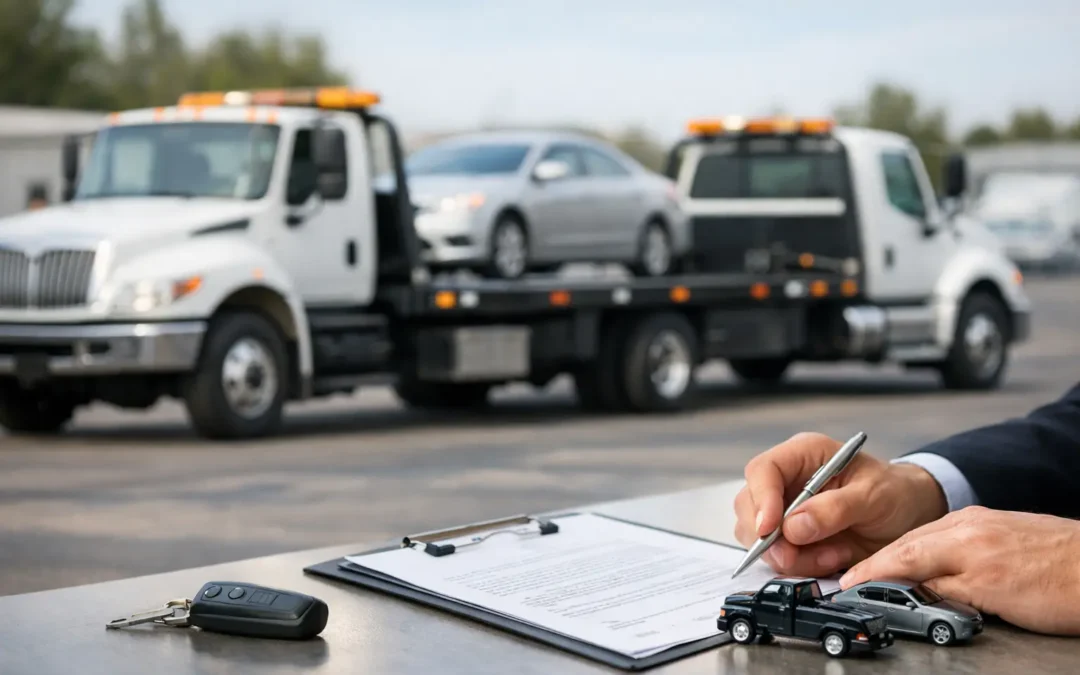
A tow truck can be involved in three losses before it leaves the scene: damage to another vehicle in traffic, damage to the disabled vehicle on the hook, and damage to a customer vehicle stored in your lot. That is why learning how to insure towing fleets starts with your actual operation, not a generic commercial auto quote. A policy that looks inexpensive can leave a major gap when a winch-out goes wrong, a stored vehicle is vandalized, or a driver causes a serious accident while responding to a call.
Towing businesses face a different risk profile than most commercial vehicle operations. Your drivers work roadside, often at night, around impatient traffic, poor weather, law enforcement scenes, and stressed vehicle owners. Your equipment handles property that does not belong to you. The right insurance program needs to address all of it while meeting the requirements of your state, municipality, motor club contracts, police rotation agreements, lenders, and commercial customers.
Start With the Fleet You Actually Run
Before requesting quotes, document every unit and every service your company provides. Underwriters need a clear picture of whether you operate light-duty wreckers, flatbeds, medium-duty units, heavy-duty rotators, service trucks, or a mix of equipment. They also need to know how far you operate, whether calls are dispatched or unsolicited, and whether you perform repossessions, private-property impounds, accident recovery, roadside assistance, or long-distance vehicle transport.
A light-duty fleet focused on local roadside assistance has different exposures than a heavy-duty operation recovering tractor-trailers after collisions. The second operation may need much higher liability limits, specialized equipment valuations, broader on-hook limits, and coverage that accounts for expensive cargo or commercial vehicles being recovered.
Be precise about driver count, garaging address, annual revenue, radius of operation, loss history, and every vehicle identification number. Do not omit occasional units, newly acquired trucks, or drivers who only work weekends. Incomplete information may produce a low initial quote, but it can also trigger an audit issue, a disputed claim, or a midterm premium adjustment.
The Core Coverage Needed to Insure Towing Fleets
Commercial auto liability is the foundation. It responds when your driver causes bodily injury or property damage to others while operating an insured vehicle. Minimum limits may satisfy a state filing requirement, but minimum limits are not always enough for a towing business operating near highways, commercial properties, and dense traffic. A severe multi-vehicle accident can exceed a low limit quickly.
Physical damage coverage protects your owned tow trucks and scheduled equipment against collision, comprehensive losses such as theft, fire, vandalism, hail, and certain weather events. The key decision is not simply whether to carry it. It is whether the stated values accurately reflect replacement cost and installed equipment. A wrecker body, wheel lift, winch, tool package, light bar, and specialized recovery gear can materially change the value of a unit.
On-hook towing coverage is essential because commercial auto liability generally does not pay for damage to a vehicle you are towing. On-hook coverage can respond if a customer vehicle is damaged while attached to, being loaded onto, unloaded from, or transported by your tow truck, subject to the policy wording. Confirm the limit applies to the highest-value vehicle you may handle, not just the average passenger car. A fleet that occasionally tows luxury vehicles, RVs, box trucks, or specialized work vehicles needs to plan for those exposures.
Garagekeepers legal liability addresses customer vehicles in your care, custody, or control while stored, parked, serviced, or impounded at your premises. This coverage matters whether you operate a fenced impound yard or hold vehicles temporarily before release. Ask whether the policy is written on a legal liability basis or direct primary basis. Legal liability generally requires you to be legally liable for the loss. Direct primary can provide broader protection for covered vehicle damage regardless of fault, depending on the form and endorsements.
General liability covers many non-driving business exposures, such as a customer slipping at your office or yard, accidental damage arising from certain operations, or advertising injury allegations. It does not replace commercial auto, on-hook, or garagekeepers coverage. Those policies are designed for distinct losses, and assuming one will fill another’s role is a common and expensive mistake.
Depending on your operation, you may also need workers’ compensation, employment practices liability, cyber liability for dispatch and payment data, umbrella liability, and coverage for tools and mobile equipment. If your business uses leased units, rented replacements, or newly purchased trucks, review hired and non-owned auto exposure and the policy’s automatic coverage provisions.
Set Limits Based on Contract Risk, Not Just Price
The right limits depend on the work you accept. Motor clubs, police departments, municipalities, property managers, lenders, salvage yards, and commercial accounts often require certificates showing specific limits and additional insured status. Review each contract before binding coverage. A contract requirement that is not reflected in your policy can put a valuable account at risk.
For many operators, the decision comes down to balancing premium against the consequences of a large loss. Raising liability, umbrella, on-hook, or garagekeepers limits increases cost, but the lowest available limits can be inadequate for a serious claim. This is especially true for fleets operating on interstate corridors, recovering commercial vehicles, or storing a high volume of impounded vehicles.
Deductibles deserve the same attention. A high physical damage deductible can reduce premium, but it must be an amount the business can pay without delaying repairs. Downtime after a tow truck accident is more than a repair bill. It can mean missed calls, lost rotation revenue, rental expense, driver disruption, and damaged customer relationships.
Watch for Coverage Restrictions
Insurance forms and endorsements matter. Ask direct questions about exclusions or limitations for repossession work, police rotation towing, private-property impounds, recovery operations, unattended vehicles, vehicle contents, and vehicles with high stated values. Clarify whether on-hook coverage applies during loading and unloading, whether garagekeepers includes theft and vandalism, and whether there are sublimits for each location.
Also verify territory. A regional operation may take an out-of-area recovery job or transport a vehicle across state lines. Your policy should match that exposure. If you add a heavy-duty unit or open a second storage yard, tell your agent before the truck is dispatched or vehicles begin arriving at the new location.
Build an Underwriting File That Works in Your Favor
Towing insurance is priced on more than the number of trucks. Carriers evaluate controls that reduce claims frequency and severity. A well-documented operation is easier to place and may create better options at renewal.
Keep driver motor vehicle reports current and enforce a written driver qualification standard. Document training on roadside safety, traffic incident management, winch operation, vehicle securement, backing, customer interaction, and photo documentation at pickup and release. Use pre-trip inspections, maintenance records, dash cameras where practical, and incident reporting procedures that require quick notification after any loss.
Yard controls are equally important. Fencing, lighting, cameras, locked key storage, vehicle inventory logs, release procedures, and clear signage can reduce garagekeepers and theft exposure. If customers’ personal property is found in a vehicle, establish a documented process for inventory and handling. Small procedural gaps often become large disputes after a loss.
Loss runs should be reviewed before renewal, not after a carrier asks questions. Separate preventable accidents from non-preventable incidents, explain corrective actions, and show how training or operational changes addressed recurring problems. A single poor loss year does not automatically make a fleet uninsurable, but unexplained claims and weak controls make placement harder.
Manage Filings, Certificates, and Changes Promptly
Some towing operations need state or local filings, proof of financial responsibility, or specific certificate language to remain on a rotation list or maintain a contract. Requirements vary widely by jurisdiction. Do not assume a filing for one state, city, or motor club satisfies another requirement.
Certificates should be requested and reviewed before work begins. A certificate is evidence of insurance, not a replacement for the policy itself, so the underlying endorsements must support what the contract requires. Keep a process for reporting new units, removed units, added drivers, new locations, and changes in operations. Waiting until renewal is too late when a claim occurs on an unscheduled vehicle or at an undeclared yard.
A towing-focused insurance broker can help compare carrier appetite, explain towing-specific forms, manage certificates, and identify compliance requirements that affect your ability to operate. Monarca Trucking Insurance Services works with commercial auto operations that need coverage built around real vehicle, driver, and dispatch exposures.
The goal is not to buy every coverage at the highest possible limit. It is to build a program that reflects the vehicles you tow, the places you work, the property you hold, and the contracts that keep your trucks busy. Review it whenever the operation changes. That discipline protects more than a tow truck – it protects the ability to answer the next call.