
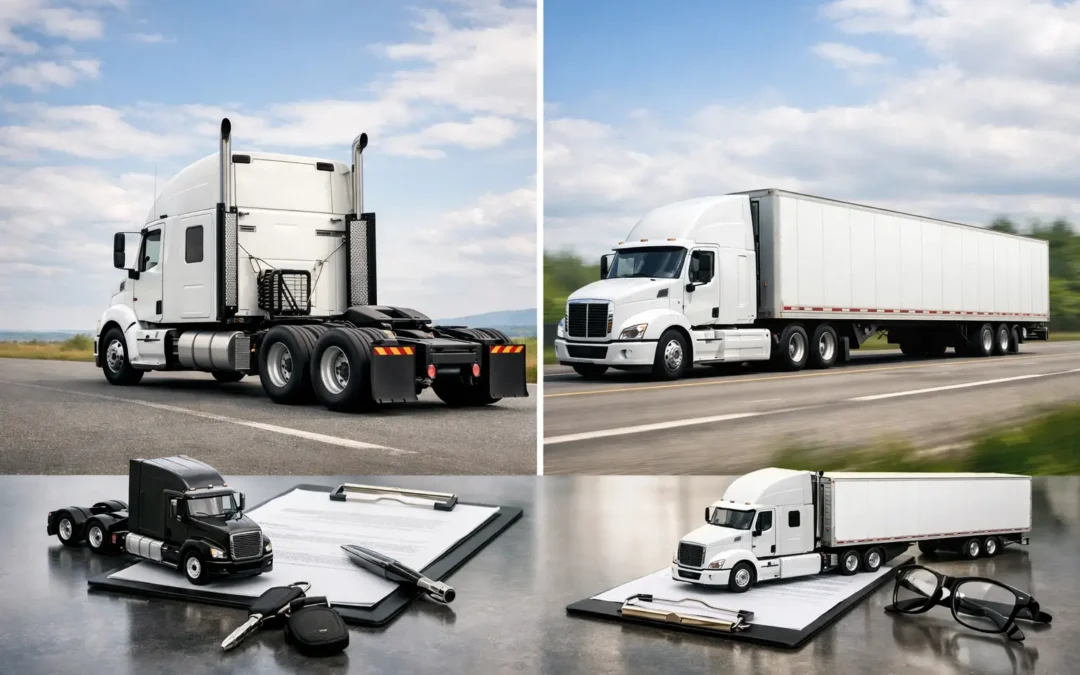
A driver drops a loaded trailer in Ontario, California, then heads to a truck stop before the next dispatch. Another driver deadheads 150 miles to pick up an assigned load. Neither truck is carrying freight at that moment, but the insurance answer can be completely different. That is the central issue in bobtail vs deadhead insurance: the truck’s status is not defined only by whether a trailer or cargo is attached. It is defined by whether the unit is being used in the business of a motor carrier.
For owner-operators and leased operators, getting this distinction wrong can leave a serious liability gap. For carriers, it can create confusion around who is responsible after an accident. The right answer depends on the lease, dispatch status, policy language, and the purpose of the trip.
Bobtail vs Deadhead Insurance: The Core Difference
Bobtail insurance is commonly used to describe non-trucking liability coverage. It generally responds when a power unit is being operated without a trailer and is not being used for the business of the motor carrier. The key phrase is non-trucking use. The truck may be bobtailing physically, but that alone does not guarantee coverage.
Deadheading means operating a tractor with no cargo, and often no trailer, while traveling to pick up a load, reposition for the next assignment, return as directed by dispatch, or otherwise perform carrier-related business. Deadheading is still commercial use. It is usually part of the dispatch cycle and should generally fall under the motor carrier’s primary auto liability policy, not the driver’s bobtail or non-trucking liability policy.
There is no universal standalone product called “deadhead insurance” in the same way there is a commonly understood non-trucking liability policy. In most trucking insurance conversations, deadhead coverage refers to the primary liability protection that applies while the truck is operating for the carrier, even though it is empty.
Bobtail is a physical description, not always a coverage answer
A tractor without a trailer is bobtailing. But insurance carriers look beyond that visual description. They ask why the truck was moving and whose business it was serving.
Consider an owner-operator leased to a carrier. Driving from home to a repair shop on a Sunday with no load, no dispatch, and no direction from the carrier may qualify as non-trucking use. Driving from that same home to a terminal because dispatch told the driver to pick up a trailer likely does not. The truck looks identical in both situations. The insurance exposure is not identical.
When Bobtail or Non-Trucking Liability May Apply
Non-trucking liability is designed primarily for leased owner-operators who need protection away from carrier business. It typically provides third-party bodily injury and property damage liability when the truck is being used for personal or non-business purposes.
Common examples may include driving the tractor to a restaurant, taking it home after completing work, going to a personal appointment, or operating it during off-duty personal use. However, policy wording matters. Some policies restrict coverage if the truck is used for any business purpose, even if it is not actively hauling freight.
A driver should not assume that an empty trip automatically qualifies. A trip to get fuel before a scheduled pickup, to wash the truck before reporting to a shipper, or to reposition near a pickup location can be viewed as furthering the carrier’s business. That can put the trip outside non-trucking liability coverage.
Bobtail coverage also does not replace required primary liability coverage. It is a limited liability solution for a specific operating scenario. It generally does not pay for damage to your own tractor, cargo claims, trailer damage, or many other exposures that come with running a trucking business.
When Primary Liability Covers Deadhead Operations
If a truck is under dispatch, en route to a pickup, returning from a delivery under carrier direction, or moving to meet the next work assignment, that is typically a primary liability situation. The fact that there is no freight in the trailer does not remove the commercial purpose of the trip.
For a carrier operating under its own authority, the carrier’s primary auto liability policy should be structured to address these normal business movements. A deadhead trip is part of the operation, just like a loaded run. The unit is still exposed to public liability claims involving other motorists, pedestrians, or property.
For a leased operator, the motor carrier may provide primary liability while the unit is under dispatch or otherwise in the carrier’s exclusive control. The lease agreement and the carrier’s insurance arrangement are critical here. Some carriers require the owner-operator to carry non-trucking liability, while others have specific insurance requirements for periods when the truck is not dispatched.
Federal filings also matter for interstate carriers. A BMC-91X filing demonstrates that required public liability coverage is in place for regulated operations. The MCS-90 endorsement may create obligations to protect the public in certain situations, but it is not a substitute for correctly structured policy coverage or a reason to assume every claim is covered. After a loss, insurers can still evaluate contractual duties, exclusions, and reimbursement rights.
The Costly Gray Areas Drivers Should Review
The most disputed claims often arise in the space between a completed load and the next one. The following situations deserve a close look at your policy and lease agreement:
- Traveling to a terminal, shipper, receiver, drop yard, or designated staging location.
- Repositioning after a delivery to be closer to the next available load.
- Driving to maintenance, fuel, scales, or a washout connected to a current or upcoming dispatch.
- Returning home after delivery when the carrier has not released the driver from service.
These scenarios are not automatically covered or excluded just because the tractor is empty. The question is whether the movement was personal, independent business use, or in the service of the carrier.
Independent business use can be especially complicated. If a leased owner-operator uses a tractor to pursue freight from another source, attend to a separate business activity, or conduct work outside the leasing carrier’s dispatch, that may not fit either the carrier’s primary policy or the non-trucking liability policy. Operators should disclose these activities to their insurance professional before a claim forces the issue.
Coverage Gaps to Watch Beyond Liability
The bobtail versus deadhead question is primarily about liability, but liability is only one part of the protection package. A collision while deadheading can damage the tractor, and primary liability does not pay to repair your own equipment. Physical damage coverage is the policy section that addresses covered loss to the tractor, subject to deductible and terms.
Cargo insurance is another separate exposure. A deadhead unit has no cargo on board, but a driver may be traveling to collect a high-value shipment. Cargo coverage must be in force when the freight is accepted and should meet the shipper, broker, or contract requirements for that haul.
Trailer interchange coverage may also be needed when an operator has possession of a non-owned trailer. General liability can address certain premises or business operations claims, but it does not replace auto liability. Each coverage solves a different problem, and combining the wrong assumptions can produce a gap at the worst possible time.
How Owner-Operators Can Set Up Coverage Correctly
Start with your operating model. Are you leased exclusively to a motor carrier, running under your own authority, or doing both at different times? A leased operator may need non-trucking liability for off-dispatch personal use, while an owner-operator with active authority generally needs primary liability for the full range of commercial operations.
Then read the lease and dispatch procedures carefully. Ask who provides primary coverage, when the carrier considers a unit under dispatch, whether the carrier requires a specific non-trucking liability form, and what happens when you are traveling between loads. Get important answers in writing rather than relying on informal assumptions.
Be precise when describing operations to your broker. Explain whether you haul interstate, how far you operate from home, whether you park the truck at your residence, whether you are dispatched through a carrier, and whether you use the truck for side work. A trucking-focused broker can compare those facts against the carrier’s policy forms and exclusions instead of quoting coverage based solely on the word “bobtail.”
For fleets, establish a written policy for dispatch release, personal conveyance, and owner-operator insurance requirements. Clear documentation helps reduce disputes after an accident and gives drivers a better understanding of when company coverage is expected to apply.
Questions to Ask Before You Bind or Renew
Before purchasing or renewing, ask whether the non-trucking liability policy excludes trips to or from a terminal, repair facility, fuel stop, or pickup location. Ask how the policy defines business use and whether personal use is allowed when a trailer is attached. If you lease to a carrier, confirm whether their primary policy covers deadhead travel before pickup and after delivery.
Also ask whether your physical damage, uninsured and underinsured motorist, medical payments, and trailer-related coverages match your actual equipment and contract obligations. The lowest premium is not a savings if the policy excludes the way the truck is actually operated.
The practical rule is straightforward: an empty truck can still be on the job. Treat deadhead travel as commercial movement unless your dispatch status, lease, and policy language clearly show otherwise. Before the next trip creates a claim, have a trucking insurance specialist review the gap between how your truck moves and how your coverage is written.