
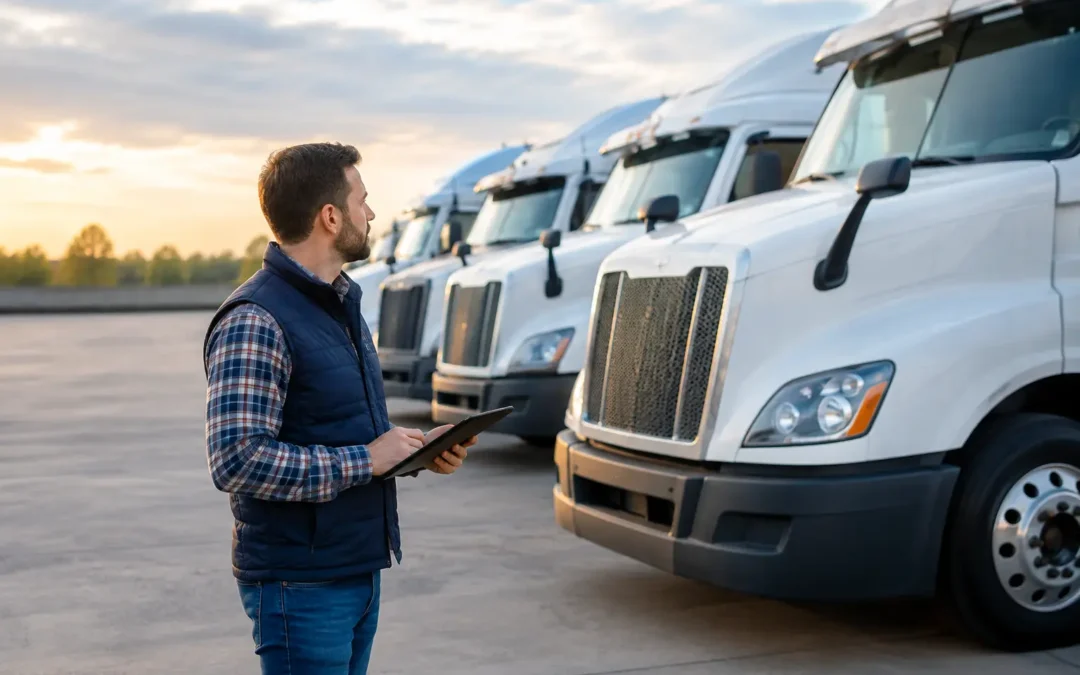
A truck can be parked for one bad afternoon and still create weeks of lost revenue. A collision on I-10, a stolen tractor at an unsecured yard, or a fire under the hood can take the equipment that produces your income out of service immediately. Physical damage insurance is the coverage designed to help repair or replace your owned trucking equipment after a covered loss.
For an owner operator, the truck may be the business’s largest asset. For a fleet, multiple units can be financed, dispatched, and committed to customers every day. Primary liability protects against damage or injury you cause to others. Physical damage coverage protects the equipment you own or finance. Those are separate exposures, and treating one as a substitute for the other can leave a serious gap.
What Physical Damage Insurance Covers
Physical damage insurance generally protects covered autos, tractors, trailers, and sometimes scheduled equipment from direct physical loss. Coverage is usually built from collision and comprehensive coverage, though carrier forms may use slightly different terms.
Collision coverage applies when a covered unit overturns or strikes another vehicle, object, or roadway surface. A jackknife, a backing accident at a shipper, a rollover on a mountain grade, or contact with a guardrail are common examples.
Comprehensive coverage, sometimes called other-than-collision coverage, addresses losses such as theft, fire, vandalism, windstorm, hail, falling objects, flood, or animal strikes. A deer collision may be handled under comprehensive rather than collision, depending on the facts of the loss and the policy language.
Some trucking policies also offer specified-perils coverage. This is narrower than comprehensive because it applies only to perils listed in the policy. It can lower premium, but it may not be the right trade-off for a newer tractor, a financed unit, or an operation that cannot easily absorb an unexpected loss.
The exact protection depends on the policy, scheduled units, endorsements, deductible, valuation method, and carrier underwriting requirements. Coverage is not automatic simply because a vehicle is listed on a liability policy. It must be specifically included and properly valued.
Why Trucking Operations Need Physical Damage Coverage
Federal motor carrier rules do not generally require physical damage insurance in the same way they require minimum public liability coverage. However, that does not make it optional from a business standpoint.
If your tractor or trailer has a lien, the lender will usually require physical damage coverage and may need to be listed as a loss payee. Many lease agreements and owner-operator contracts also require it. More importantly, a lender’s requirement does not change the practical reason for carrying the coverage: a major loss can stop a carrier from earning revenue while loan payments, permits, payroll, and other fixed expenses continue.
Consider a first-year carrier with one financed sleeper tractor. A rollover may create repair costs well into five figures, along with towing, storage, and lost dispatch revenue. Without physical damage coverage, the owner may need to pay the repair bill out of pocket or continue making payments on a truck that cannot run. For a small fleet, losing even one late-model unit can disrupt customer commitments and place pressure on the rest of the operation.
Physical damage coverage is particularly relevant for long-haul carriers, hotshot operations, dump truck businesses, towing companies, contractors, NEMT operators, and fleets that regularly park equipment in high-theft areas. The exposure changes by operation, but the underlying issue stays the same: damaged equipment cannot generate revenue.
Trailers, non-owned trailers, and attached equipment
A tractor policy does not automatically protect every trailer you pull. Owned trailers should be scheduled or otherwise covered according to the policy terms. If you haul a customer’s trailer or a trailer supplied by another carrier, you may need trailer interchange coverage. That coverage addresses physical damage to a non-owned trailer while it is in your care, custody, or control under a written trailer interchange agreement.
Attached equipment also deserves attention. Refrigeration units, permanently mounted toolboxes, custom racks, liftgates, and specialized hauling equipment may require separate scheduling or endorsement. Do not assume a standard tractor valuation captures every accessory that adds value to the unit.
How the Truck Is Valued After a Loss
The valuation provision can determine whether a claim truly puts your operation back on the road. Many commercial physical damage policies settle total losses based on actual cash value, which reflects the vehicle’s market value immediately before the loss. Depreciation, mileage, condition, and comparable equipment values can all affect the final amount.
Other options may include stated amount, agreed value, or replacement cost provisions. These terms are not interchangeable. A stated amount may affect the maximum payable amount but may not guarantee that figure in every claim. Agreed value can provide more certainty when properly structured, while replacement cost coverage may be available only for certain equipment and conditions.
The right valuation depends on the age of the truck, financing balance, market conditions, and the cost of replacing it with comparable equipment. A unit purchased during a high-price equipment market may be worth less at the time of loss than the outstanding loan balance. That gap can become the owner’s problem unless it is addressed through the right valuation approach and, where appropriate, gap protection.
Deductibles: Lower Premium, Higher Out-of-Pocket Cost
The deductible is the amount your business pays before the insurer pays a covered physical damage claim. A higher deductible can reduce premium, which is why it is often attractive to new ventures and cost-conscious fleets. But it also means the business needs enough cash available to handle a repair before insurance responds.
A $5,000 deductible may work well for a fleet with reserve funds and several revenue-producing units. It may be difficult for a one-truck operation that needs immediate repairs after a loss. The practical question is not just, “How much premium can I save?” It is, “Can I pay this deductible tomorrow and still keep the truck moving?”
Deductibles can also vary by cause of loss. Theft, glass, collision, and comprehensive claims may have different deductible structures. Review those details before binding coverage, especially if your equipment is frequently parked outside, operates in theft-prone corridors, or runs routes with elevated weather exposure.
What Physical Damage Insurance Does Not Cover
Physical damage coverage is not a maintenance contract. Normal wear and tear, mechanical breakdown, corrosion, tire failure, and defective parts are commonly excluded unless a separate endorsement applies. If an engine fails due to internal mechanical issues without a covered event, physical damage coverage will generally not pay for the repair.
It also does not replace cargo coverage. If a refrigerated trailer is damaged in a collision, physical damage may address the trailer itself, while motor truck cargo coverage may respond to covered damage to the freight. Likewise, it does not replace primary liability, general liability, bobtail coverage, or non-trucking liability. Each responds to a different risk.
There can also be limitations related to unlisted drivers, prohibited use, unauthorized operations, or failure to report material changes. Adding a unit, changing from local hauling to long-haul work, expanding into a new commodity, or operating under a different authority should be reported to your broker promptly. A policy built for one operation may not fit another.
Setting Up Coverage That Matches Your Operation
Accurate information produces a cleaner quote and reduces surprises at claim time. Start with the VIN, year, make, model, purchase price, current market value, lienholder information, garaging location, and any permanently attached equipment. Fleet operators should also identify which units are owned, financed, leased, or temporarily substituted.
Then match the coverage to the way the truck works. A local box truck that returns to a secured yard every night has a different theft and mileage profile than an over-the-road tractor parked at truck stops across multiple states. A dump truck faces different rollover and jobsite hazards than a dry van carrier. The goal is not to buy the cheapest physical damage insurance available. It is to set a deductible, valuation method, and coverage scope that your business can actually rely on after a loss.
Before binding, confirm that the loss payee wording is correct, trailers are addressed, and any required certificates or filings are handled without delay. For carriers managing FMCSA compliance, lender requirements, and customer contracts at the same time, those administrative details matter just as much as the premium.
A damaged truck is already a disruption. The coverage decision should not become a second one. Work from the real value of your equipment, the cash reserves you can access, and the routes and risks your operation faces, so a covered loss has a clear path from the claim report to getting back on the road.