
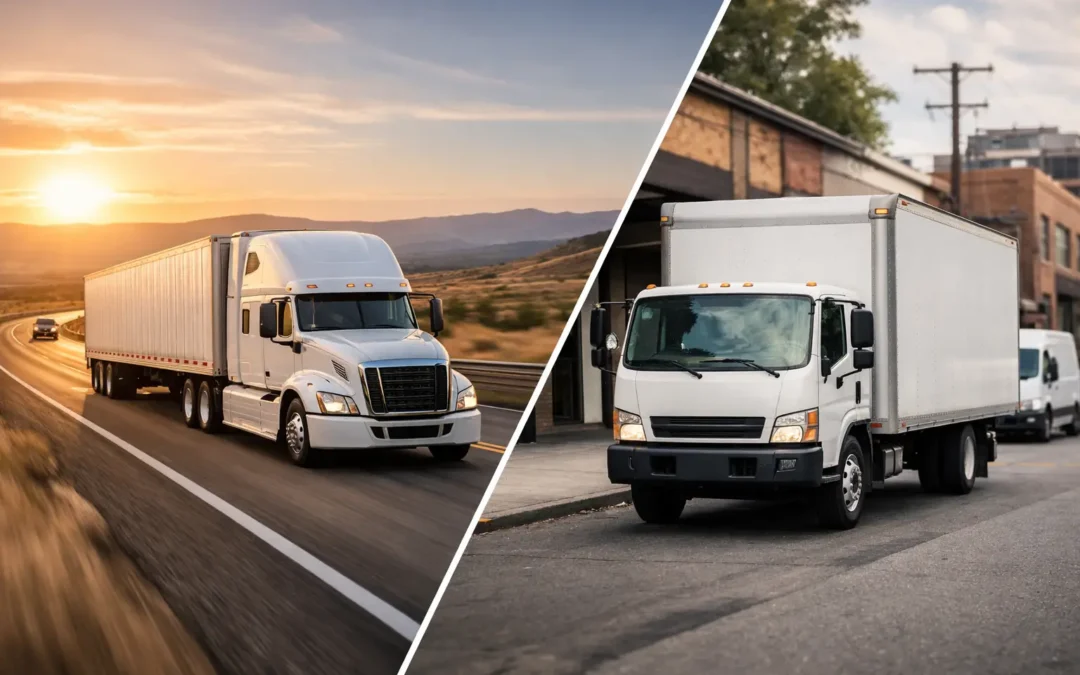
A truck running produce from California to Texas does not present the same insurance risk as a day cab making five local deliveries inside a 50-mile radius. That is the real issue behind long haul vs local trucking insurance. The lane, radius, cargo, schedule, and downtime exposure all change how an underwriter looks at your operation, and those differences can show up in both premium and coverage structure.
Many operators assume trucking insurance is mostly about truck value and driving record. Those matter, but they are only part of the picture. The farther you run, the more jurisdictions you cross, the longer the truck stays on the road, and the more variables you introduce. On the local side, frequency of stops, urban congestion, tight delivery windows, and regular backing can create a different kind of claims profile. Neither model is automatically cheaper or easier to insure. It depends on how the operation is built.
What long haul vs local trucking insurance really means
Insurance companies do not only classify trucking by what you call your business. They look at operating radius, type of authority, commodity, equipment, driver experience, garaging, and loss history. In practical terms, long haul usually means interstate operations with a wider radius and extended time away from the terminal. Local trucking usually means a tighter radius, more predictable routes, and same-day return to base, although definitions can vary by carrier.
That distinction matters because insurance pricing follows exposure. A truck covering 2,500 miles a week on interstate lanes may have fewer stops than a local unit, but it is exposed to more road hours, weather zones, and out-of-state claim environments. A local truck may stay near home yet face dense traffic, customer yards, loading docks, and more frequent low-speed impact exposure. Underwriters know this, and they rate accordingly.
Why long haul trucking insurance is usually structured differently
Long haul operations tend to need a broader insurance conversation from the start. If you run under your own authority, primary liability is the foundation, and FMCSA filings such as BMC-91X need to be correct and active. Cargo insurance also becomes more critical when loads are moving across multiple states, staying in transit longer, or involving higher-value commodities.
Physical damage can be more significant for long haul operators because breakdowns and accidents away from home create higher recovery and downtime costs. If the truck is financed, lender requirements may also be stricter. Non-trucking liability or bobtail coverage may matter for leased operators, but the exact need depends on the lease agreement and who carries primary responsibility when the truck is not under dispatch.
Long haul risks also draw more attention to driver history and years of CDL experience. Carriers want to know whether the operation is built to handle distance, fatigue exposure, roadside inspections, and overnight parking risk. A new venture with no prior authority and no long haul loss history may still get coverage, but usually not on the same terms as an established fleet with a clean record.
Common rating factors for long haul
Underwriters usually look closely at interstate radius, states of operation, commodity type, trailer interchange exposure, and whether the business hauls general freight, refrigerated goods, containers, or something more specialized. They may also review ELD usage, hiring standards, MVRs, prior DOT safety history, and whether drivers are owner operators or employees.
If your lanes include major freight corridors, border traffic, or heavy metro areas, that can also affect pricing. The question is not just where the truck goes. It is how the operation performs while it is there.
How local trucking insurance changes the risk picture
Local trucking often sounds lower risk because the truck stays close to home. Sometimes that is true. A short radius can reduce severe highway exposure and make dispatch, maintenance, and supervision easier. But local work brings its own claims pattern.
A local box truck, dump truck, tow truck, or tractor doing port, warehouse, retail, or construction-related work may stop repeatedly during the day, operate in tighter spaces, and back more often than a long haul unit. That can increase the chance of property damage, contact claims, and yard incidents. If cargo is touched more often, loaded and unloaded frequently, or handled on strict schedules, that adds another layer of exposure.
For local operators, insurance can also be shaped by business type as much as radius. A last-mile delivery account, intermodal run, NEMT vehicle, or contractor fleet may all be local, but the underwriting approach is completely different. That is why a quote based only on mileage or a simple radius estimate can miss the real issue.
Local does not always mean low premium
One of the most common mistakes is assuming a local operation should automatically pay less. If the unit operates in dense city traffic, makes constant stops, carries specialized equipment, or has drivers with mixed experience, local can still price high. Some local classes also have more frequent small claims, and insurers track that closely.
The better question is whether the premium matches the actual exposure. If your application is coded as long haul when you are really local, or as local when you regularly run interstate, the policy may be misrated from the beginning. That creates problems not only for cost but for underwriting accuracy when a claim happens.
Coverage differences that matter in long haul vs local trucking insurance
The core policies can look similar on paper, but the right limits and endorsements often differ. Primary liability is required for for-hire carriers under federal authority, but cargo limits may need to be higher for long haul refrigerated freight than for local drayage. Physical damage deductibles may be set differently depending on equipment value, cash flow, and downtime tolerance.
General liability may matter more for operations with regular shipper, receiver, or yard access. Trailer interchange becomes important when you pull non-owned trailers under written interchange agreements. Motor truck cargo details need careful review if you haul temperature-sensitive freight, electronics, beverages, or commodities with theft exposure. For local and regional accounts tied to ports or rail, container and intermodal requirements can introduce separate compliance and contractual issues.
This is where trucking-only insurance advice matters. A policy that technically meets a filing requirement may still leave a gap in day-to-day operations. That gap usually shows up when a certificate is requested, a contract is reviewed, or a claim turns into a coverage argument.
What owner operators and fleets should ask before choosing a policy
Start with your actual operating radius, not the radius you think might get a better quote. Be clear about whether you cross state lines, where the truck is garaged, what commodities you haul, and whether drivers return home daily. If you are leased on, review who provides primary liability and what your non-trucking or bobtail responsibility really is.
For fleets, consistency matters. If one truck runs local and another runs regional or long haul, forcing both into the same insurance profile can create bad pricing and underwriting friction. Mixed operations are common, but they need to be disclosed properly. The same applies to seasonal shifts. If you mostly run local but take longer lanes during produce season or peak freight periods, your broker should know that before the policy is placed.
New venture carriers should pay special attention here. A first-year authority doing long haul often sees tighter underwriting than an experienced local operator with stable contracts, but that does not mean local is always easier. The deciding factor is whether the operation is documented well and matches the carrier appetite.
Getting the classification right from the start
Long haul vs local trucking insurance is not just a pricing label. It affects how your risk is presented to the market, which carriers will consider the account, what supporting documents may be needed, and how confidently an underwriter can price the exposure.
A specialized trucking broker will usually ask more detailed questions than a generalist agency, and that is a good thing. They are trying to match your authority, filings, equipment, and hauling pattern to the right market before a problem shows up at binding, certificate request, or claim time. For operators who need fast turnaround and accurate compliance support, that level of precision saves more than money. It helps keep the trucks legally on the road.
If your operation has changed over the last year, this is a good time to review whether your policy still reflects what your trucks actually do every week. Insurance works best when it matches the route, the freight, and the business you are running now, not the one you started with.