
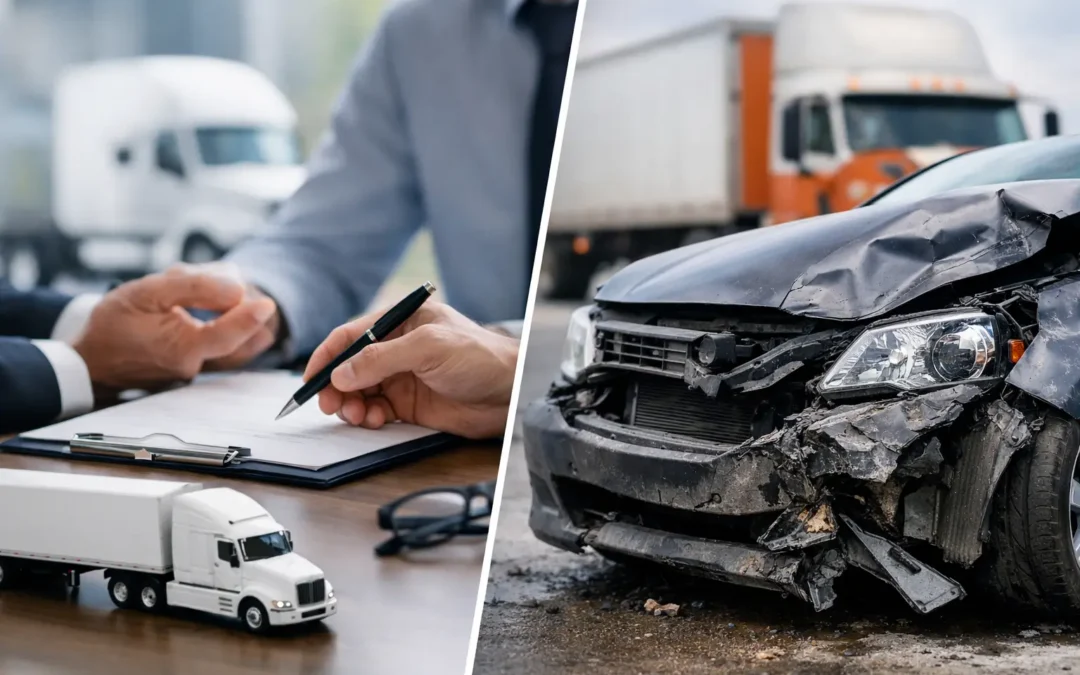
If a truck is totaled in a crash, many operators assume their insurance will handle both the other party’s losses and the truck itself. That is where costly mistakes happen. In trucking, primary liability vs physical damage is not a minor coverage detail. It is the difference between meeting legal requirements to stay on the road and actually having protection for your equipment when something goes wrong.
For owner operators, new ventures, and fleet managers, these coverages do two very different jobs. One keeps your authority compliant and responds when you injure someone else or damage their property. The other helps pay to repair or replace your own truck, subject to the policy terms, deductibles, and valuation method. If you confuse the two, you can end up legally insured but financially exposed.
Primary liability vs physical damage: the core difference
Primary liability is the coverage that responds when your truck causes bodily injury or property damage to others. If your driver rear-ends a passenger vehicle, damages a loading dock, or causes a multi-vehicle accident, primary liability is the policy that steps in for covered third-party claims. This is the core public liability coverage tied to trucking authority and regulatory compliance.
Physical damage is different. It covers your insured truck or trailer for direct damage from risks like collision, fire, theft, vandalism, weather, and certain other causes of loss, depending on the policy. If your tractor hits a guardrail, your parked truck is stolen, or hail damages the cab, physical damage is the coverage designed for your own equipment.
That means one protects the public from your operation, and the other protects your investment in the vehicle. They are related because both are common on trucking policies, but they are not interchangeable.
What primary liability covers in trucking
Primary liability is often the first coverage a motor carrier thinks about because it is tied directly to operating authority. FMCSA filings such as BMC-91 or BMC-91X are connected to liability requirements, not physical damage. If you are running under your own authority, this is the coverage that helps satisfy federal and state requirements so you can legally operate.
In practical terms, primary liability typically addresses bodily injury and property damage suffered by third parties when your truck is at fault in a covered accident. That can include medical bills, legal defense, settlements, and damage to another person’s vehicle or property. For many for-hire carriers, the required minimum can vary based on the type of freight and operation, but minimum limits and adequate protection are not the same thing.
That trade-off matters. Carrying only the minimum required limit may help control premium, but serious losses can exceed minimums fast, especially in heavy truck accidents. A low limit may keep you compliant, yet still leave your business exposed to major claim severity or make you less attractive for certain contracts.
What physical damage covers
Physical damage is usually split into collision and comprehensive coverage. Collision applies when your truck is damaged in an accident involving impact, whether that is with another vehicle or an object. Comprehensive generally applies to non-collision losses such as theft, fire, vandalism, falling objects, or weather events.
For financed trucks, lenders commonly require physical damage because the equipment is collateral. Even when there is no lender involved, many operators carry it because a truck out of service can create an immediate income problem. Repair costs on commercial units are high, and replacing a totaled tractor out of pocket is not realistic for most small carriers.
Still, physical damage is not automatic and it is not unlimited. The policy pays according to the covered cause of loss, deductible, and how the truck is valued. Actual cash value is common, which means depreciation matters. If you owe more on the truck than its insured value at the time of loss, you may still face a balance after the claim is paid.
Why truckers mix them up
The confusion usually starts because both coverages can appear on the same commercial trucking policy, and both relate to accidents. But the claim direction is what separates them. If the damage is to someone else, think liability. If the damage is to your truck, think physical damage.
New ventures are especially vulnerable to this mistake. They often focus on what is needed to file authority, get a certificate, or satisfy a shipper. That puts attention on compliance coverages first. Then a unit gets stolen, a driver jackknifes in bad weather, or a hood and bumper repair comes back at five figures, and they realize the legally required policy was never meant to pay for their own equipment loss.
Leased operators can run into a similar problem if they assume the motor carrier’s insurance covers everything. It depends on the lease agreement, dispatch arrangement, and what coverages are placed where. Never assume liability and physical damage are included just because a truck is under load or attached to a carrier.
Primary liability vs physical damage in real-world scenarios
A simple example makes this easier. Say your driver changes lanes, clips a box truck, and pushes it into a concrete barrier. The other driver is injured and their vehicle is badly damaged. Your primary liability policy is the one that would generally respond to those third-party losses if the claim is covered.
Now take the same accident and look at your own tractor. Your grille, headlight assembly, bumper, and hood are damaged. Primary liability does not repair your truck. That is where physical damage coverage would typically apply, minus the deductible and subject to the policy terms.
Or consider a theft. Your parked tractor disappears from a truck stop overnight. No third party is making a bodily injury or property damage claim against you, so liability coverage is not the issue. This is generally a physical damage claim under comprehensive.
On the other hand, if your driver takes out a customer’s gate while backing into a yard and your trailer has no damage, physical damage may not come into play at all. That is a liability loss because the damaged property belongs to someone else.
Do you need both?
For many trucking businesses, yes, but for different reasons.
Primary liability is usually essential if you are operating as a for-hire carrier under your own authority. Without it, you may not meet legal operating requirements. Physical damage may not be required by law in the same way, but it is often required by lenders and strongly considered by operators who cannot afford to absorb equipment losses.
Whether both make sense depends on your unit value, cash reserves, financing terms, operating radius, driver experience, and tolerance for downtime. An older truck with low market value might lead some operators to carry higher deductibles or decline physical damage altogether. That lowers premium, but it also means one major loss could shut the business down or force a truck replacement at the worst time.
For newer equipment, physical damage is often less negotiable. The premium is part of protecting a major asset and preserving business continuity.
Common gaps to watch for
One of the biggest mistakes in primary liability vs physical damage decisions is treating the quote as a checkbox instead of a risk review. Coverage gaps often show up in the details.
Deductibles matter. A lower premium can come with a deductible that creates cash flow pressure after a loss. Valuation matters too. If the truck is not scheduled correctly or the stated value is off, claim settlement expectations can fall apart fast.
There is also the issue of downtime. Physical damage helps with the truck itself, but standard policies do not always make you whole for lost revenue while that unit is off the road. If one tractor generates the majority of your income, a covered repair still hurts if the truck sits for weeks waiting on parts.
And neither primary liability nor physical damage replaces cargo coverage, bobtail coverage, non-trucking liability, general liability, or other protections that may apply to your operation. A trucking insurance program works when the pieces fit the way your business actually runs.
How to choose the right structure for your operation
The right approach starts with your operation, not a generic package. A new authority hauling general freight over the road has a different exposure than a local dump truck, tow operation, intermodal carrier, or NEMT account. Equipment age, power unit count, financing, driver profile, and contract requirements all affect how these coverages should be structured.
That is why specialized trucking agencies matter. A trucking-focused broker is not just comparing price. They are looking at filings, radius, commodity, unit valuation, deductible strategy, and carrier appetite. Monarca Trucking Insurance Services Inc works in that lane because trucking insurance is not just about getting a quote. It is about keeping the business compliant and keeping trucks moving when claims happen.
If you are reviewing your policy, ask a direct question: if my truck causes damage to someone else, what responds, and if my truck is damaged, what responds? If the answer is not clear in plain language, the coverage structure needs another look.
The best insurance decision is usually not the cheapest one on paper. It is the one that matches how your trucks operate, what your contracts require, and what your business could realistically survive after a bad loss. That is the kind of clarity that keeps small mistakes from turning into expensive shutdowns.