
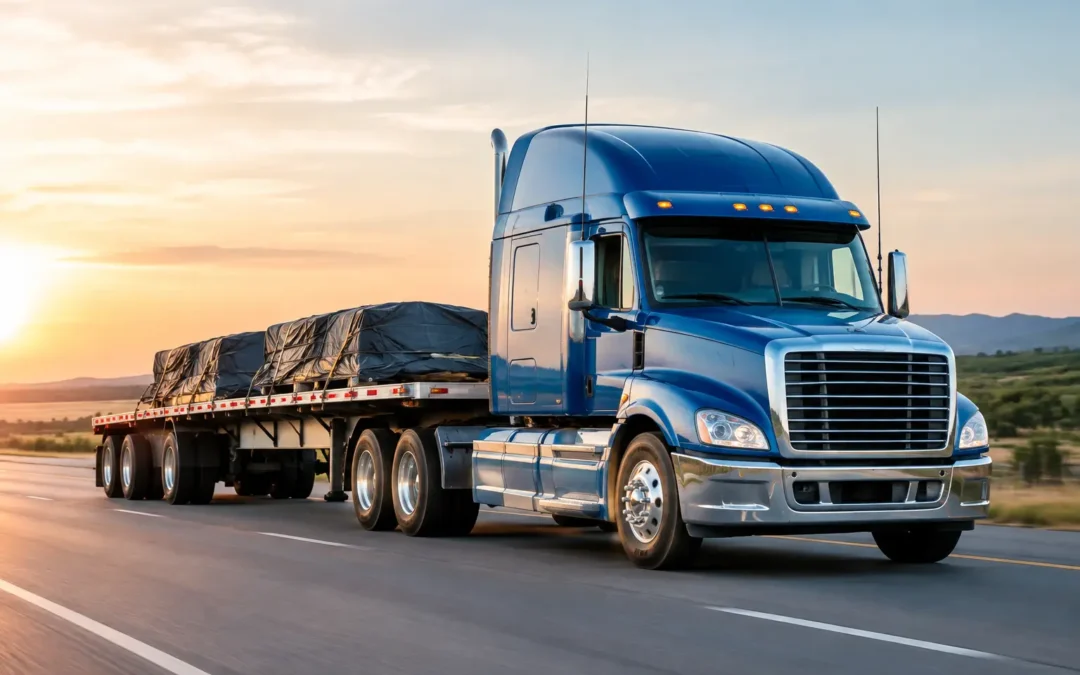
A flatbed load can look secure at pickup and become a major claim before the truck reaches the first scale house. Steel coils, lumber, machinery, concrete products, pipe, and oversized freight each create a different exposure. The top coverages for flatbed operators need to account for more than a tractor and trailer. They need to protect the authority, the freight, the equipment, and the operator’s ability to keep booking loads after a loss.
Flatbed insurance should be built around what you haul, how far you run, who owns the trailer, and what contracts or shipper requirements apply to your business. A carrier hauling bundled lumber regionally does not face the same risk profile as an operator moving steel coils across state lines or hauling machinery with tarps, chains, binders, and escort requirements. The right policy structure starts with those operational facts.
Top Coverages for Flatbed Operators
Primary auto liability
Primary auto liability is the foundation of a flatbed insurance program. It responds when your truck causes bodily injury or property damage to another party in a covered accident. For interstate carriers operating under their own authority, it is also central to FMCSA compliance and BMC-91X filing requirements.
Many for-hire carriers need at least $750,000 in public liability coverage to operate federally, but that minimum is not always enough for the freight you haul or the brokers you work with. Shippers, freight brokers, and dedicated contracts commonly require $1 million in auto liability. Higher limits may be appropriate when running congested freight corridors, hauling heavy commodities, or operating multiple units.
A low premium is not automatically a good deal if the policy has restrictive terms, an inadequate radius, or limits that do not meet customer requirements. Your agent should confirm that the policy matches your authority type, operating states, driver list, vehicle schedule, and stated commodities before filings are submitted.
Motor truck cargo coverage
Cargo coverage is especially important for flatbed operators because the load is exposed. Unlike dry van freight, flatbed cargo is subject to weather, road debris, theft, shifting, improper securement allegations, loading damage, and tarp failures. A claim can arise even when the freight never leaves the trailer.
The cargo limit should reflect the maximum value of a single load, not the average load value. If you usually haul $75,000 in construction materials but occasionally accept a $150,000 machinery load, a $100,000 cargo limit may leave a serious gap. Some customers also require specific limits before they tender freight.
Read cargo exclusions closely. Policies may restrict certain commodities, exclude unattended equipment, apply theft conditions, or limit coverage for wetness, rust, temperature issues, or improper loading. Coil hauling, metal products, building materials, machinery, and over-dimensional freight should be accurately disclosed during underwriting. Do not assume a general cargo policy covers every commodity listed on a load confirmation.
Securement is another key issue. Federal cargo securement rules still apply whether the shipper loads the freight or your driver assists. Chains, straps, edge protectors, tarps, binders, dunnage, and blocking should be maintained and documented. Insurance is there for an unexpected covered loss, not as a substitute for a defensible securement process.
Physical damage for tractors and trailers
Physical damage covers repairs or replacement when a covered truck or trailer is damaged by collision, theft, fire, vandalism, hail, or other covered causes of loss. For a flatbed operator, this coverage often protects more than the power unit. It may also apply to company-owned flatbeds, step decks, RGNs, or specialty trailers, depending on how the equipment is scheduled.
The deductible matters just as much as the premium. A higher deductible can reduce the monthly cost, but it also increases the cash your business needs after a collision. Consider what you could realistically pay while handling towing, missed loads, and equipment repairs.
Ask how the policy values equipment. Actual cash value reflects depreciation and may not replace a newer tractor for what you still owe. Stated amount and agreed value options can work differently, and neither should be selected without understanding the settlement basis. Lenders may also require specific physical damage terms and loss payee language.
Non-trucking liability and bobtail coverage
Owner operators leased to a motor carrier often need non-trucking liability, commonly called bobtail coverage. This coverage generally applies when the truck is being used for personal, non-dispatched purposes. It is not a replacement for the carrier’s primary liability policy, and it usually does not cover business use outside the lease arrangement.
The distinction matters. Driving home after dropping a trailer may be treated differently than heading to a repair shop, repositioning for a load, or deadheading under dispatch. The lease agreement and policy wording determine when coverage applies. Operators should not rely on the word “bobtail” alone without reviewing the actual use restrictions.
Trailer interchange coverage
Trailer interchange coverage is necessary when you pull a trailer you do not own under a written trailer interchange agreement. A common example is picking up a customer’s loaded trailer, a broker-controlled trailer, or equipment provided through a freight arrangement. If that trailer is damaged while in your care, custody, or control, your tractor’s physical damage coverage may not respond.
Flatbed operators should pay close attention to this exposure because trailers can be specialized and expensive. A damaged extendable flatbed, step deck, or lowboy can create a claim far beyond the value of a basic utility trailer. The limit should reflect the highest-value non-owned trailer you may pull, not the lowest-value trailer in regular rotation.
General liability and umbrella liability
General liability addresses business risks that do not stem directly from operating the truck on the road. It can help with covered third-party bodily injury, property damage, advertising injury, or premises-related claims. For example, a visitor injured at your yard or a loading-area incident that is not covered by auto liability may fall under general liability, subject to policy terms.
An umbrella or excess liability policy adds protection above underlying liability limits. It is not required for every one-truck operation, but it deserves consideration for fleets, higher-value contracts, heavy hauling, and businesses with significant assets to protect. The decision depends on your contract requirements, loss history, commodities, operating radius, and financial exposure.
Coverage Gaps That Can Cost a Flatbed Carrier
The best flatbed insurance policy can still leave a carrier exposed if the application does not match real operations. A truck insured for regional general freight may not be properly rated for nationwide runs, coil hauling, oversize loads, or regular trips into high-density metro areas. Adding a trailer, hiring a driver, changing commodities, or expanding authority without updating the policy can create problems when a claim occurs.
Downtime is another operational risk. Standard physical damage coverage pays for covered vehicle damage, but it does not automatically replace the revenue lost while your truck is in the shop. Some carriers may offer towing, rental reimbursement, or downtime-related options, but availability and terms vary. Ask about these options before a loss, not when dispatch is waiting on an empty truck.
For new ventures, filing speed and compliance accuracy are equally important. A policy is only useful if the proper filings are completed and your authority can remain active. MCS-90 endorsements, BMC-91X filings, certificates of insurance, and lender requirements should be handled by a trucking-focused insurance team that understands how those details affect your ability to operate.
How to Build the Right Flatbed Insurance Program
Start with a clear picture of your operation: the commodities you haul, maximum cargo value, states you run, trailer ownership, driver experience, garaging location, loss history, and contract requirements. Bring copies of load confirmations, lease agreements, trailer interchange agreements, and shipper insurance requirements when requesting quotes. These details help avoid a policy built on assumptions.
Then compare more than the price. Review liability and cargo limits, deductibles, listed commodities, exclusions, radius, driver restrictions, payment terms, and claims support. A less expensive quote can become costly if it excludes the freight that produces your best revenue or cannot issue certificates when a broker needs them.
Monarca Trucking Insurance Services works with trucking operators to match coverage with the actual demands of their authority, freight, and equipment. For flatbed carriers, the goal is straightforward: place coverage that satisfies compliance requirements while protecting the work that keeps your truck moving. Before accepting the next unfamiliar load, make sure your policy recognizes the risk sitting on your deck.