
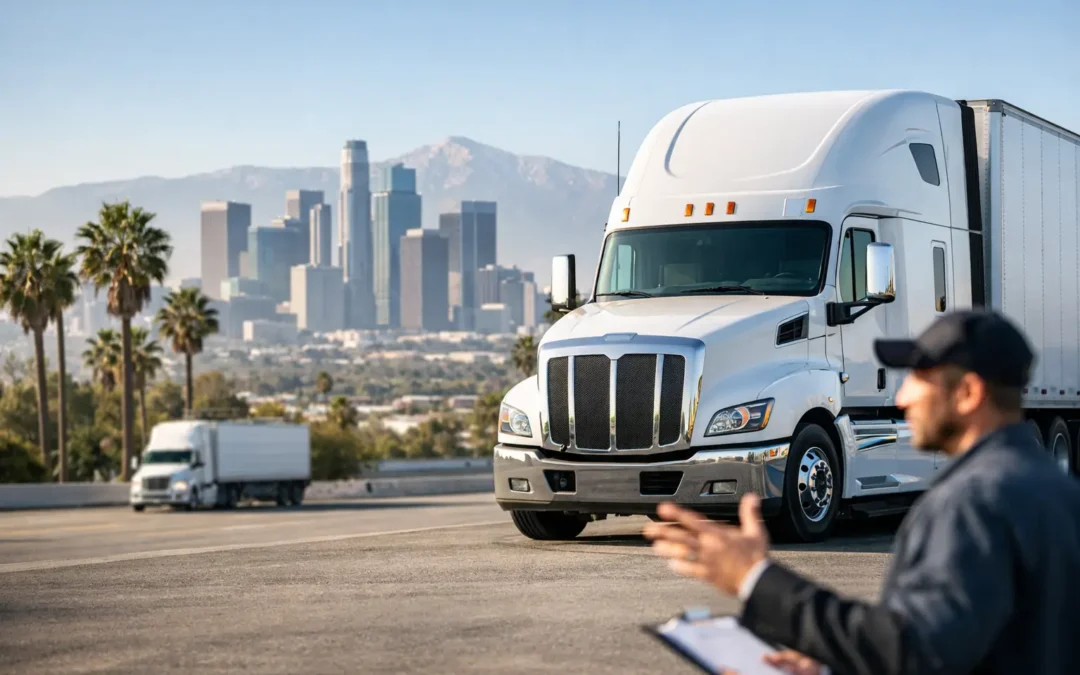
Southern California trucking insurance has to do more than satisfy a broker, shipper, or DOT requirement. It has to protect a business operating around congested ports, aggressive traffic, expensive equipment, tight delivery windows, and freight customers that expect certificates before a truck is loaded. For an owner-operator or fleet, the right policy is part of staying authorized, booking freight, and recovering when a loss puts equipment out of service.
A low premium can look attractive until a certificate is delayed, a filing is incorrect, cargo coverage does not match the commodity, or a physical damage settlement leaves the operator short of replacing a truck. Insurance should be built around the operation you actually run, not a generic commercial auto application.
Why Southern California trucking risk is different
Southern California is one of the country’s busiest freight markets. Trucks serving the Ports of Los Angeles and Long Beach, Inland Empire warehouses, rail yards, construction sites, and regional distribution centers face risk patterns that do not always show up in a standard quote form.
Traffic density is the obvious issue. A short local route can involve more lane changes, more passenger vehicles, more stop-and-go driving, and more opportunities for a liability claim than a longer stretch of open highway. Parking is another concern. Cargo theft, vandalism, and vehicle damage are real exposures when tractors, trailers, or containers sit overnight in unsecured locations.
The type of freight matters just as much. A carrier moving general dry freight has different cargo exposure than a drayage operator hauling import containers, a reefer running produce, a dump truck serving a jobsite, or a flatbed transporting machinery. Underwriters want a clear picture of commodities, routes, radius, garaging locations, driver experience, and how equipment is used between pickups and deliveries.
That does not mean every Southern California operation pays the same rate. It means accurate underwriting matters. A carrier with experienced drivers, documented safety practices, stable operations, and a clean loss history may be viewed very differently from a new venture hauling high-value freight through port and warehouse corridors.
Core coverage for a trucking operation
A trucking policy should be assembled around contractual requirements, regulatory obligations, and the financial damage a loss could cause. The exact limits depend on the operation, but several coverages are foundational.
Primary auto liability
Primary liability pays for bodily injury and property damage caused to others in an at-fault accident. It is the coverage most closely tied to public protection, shipper contracts, and FMCSA financial responsibility requirements.
Many for-hire carriers need at least $750,000 in liability, while $1 million is common and frequently required by brokers and freight customers. Certain commodities and operations may require higher limits. Choosing the minimum solely because it is cheaper can create a problem when a shipper requires a higher limit before tendering a load.
Motor truck cargo
Cargo coverage protects the freight in your care, custody, or control, subject to the policy’s terms, exclusions, deductibles, and limits. The right limit should reflect the maximum value of a typical load, not only the average load.
A carrier hauling $100,000 loads with a $50,000 cargo limit has a serious coverage gap. Commodity restrictions also matter. Electronics, seafood, pharmaceuticals, alcohol, hazardous materials, temperature-sensitive goods, and unattended trailers can trigger special underwriting or policy conditions. Read the cargo form closely, especially for exclusions tied to theft, refrigeration breakdown, loading and unloading, and unattended equipment.
Physical damage and downtime exposure
Physical damage covers scheduled equipment for collision, comprehensive losses, fire, theft, vandalism, and other covered causes of loss. It protects the truck or trailer, but it does not automatically replace the revenue lost while that unit is in the shop.
A newer tractor with a loan or lease usually needs physical damage coverage. The deductible should be a number the business can pay without disrupting fuel, payroll, maintenance, or dispatch. Higher deductibles can lower premium, but only when the operator has cash reserves to absorb a claim.
Consider rental reimbursement, towing, and downtime-related options where available and appropriate. These endorsements are not substitutes for a cash reserve, but they can help a business respond when a unit is disabled far from its next pickup.
Bobtail, non-trucking liability, and trailer interchange
Leased operators often need bobtail or non-trucking liability for times they are not dispatched for the motor carrier. The distinction is important: coverage may not apply while the truck is being used in the business of the carrier, even if no load is attached.
Trailer interchange coverage may be necessary when a carrier takes possession of a trailer it does not own under a trailer interchange agreement. It is different from physical damage on your own equipment. Operators serving ports, intermodal facilities, and larger freight networks should review who owns the trailer, who is responsible for damage, and what the contract requires before assuming a trailer is automatically covered.
Southern California trucking insurance filings and compliance
Insurance is not fully operational until the required filings are in place. A policy declaration page is not the same as an active filing with the proper authority.
For interstate for-hire carriers, the BMC-91X filing provides evidence of required public liability coverage to the FMCSA. The MCS-90 endorsement is also significant. It is a federal endorsement that can obligate an insurer to pay certain public liability claims when required, even if the policy might not otherwise respond. It is not broad cargo or physical damage protection, and it should not be treated as a substitute for correctly structured coverage.
California operations may also face state-specific registration, permit, and contract requirements depending on the work performed. Intrastate carriers, household goods movers, construction haulers, and specialized operators can have different obligations. A missed cancellation notice, late reinstatement, or filing error can interrupt authority and cost far more than the administrative issue that caused it.
This is where a trucking-focused agency adds practical value. Monarca Trucking Insurance Services works with trucking operators on policy placement as well as filings, certificates, and the details that can affect whether a carrier is ready to move freight.
What drives your premium
There is no honest one-size-fits-all price for Southern California trucking insurance. Premium is based on the risk an insurer is being asked to take, and every detail on the application can affect the result.
The main rating factors include driving records, years of commercial driving experience, prior insurance history, claims, vehicle values, radius of operation, commodities, garaging ZIP codes, number of power units, and requested limits. New ventures often pay more because they do not yet have a loss history for underwriters to evaluate. That is not a penalty for being new. It is the market pricing uncertainty.
Growth can change the rating picture quickly. Adding a driver with a poor motor vehicle record, expanding from local delivery to 48-state long-haul, changing from general freight to refrigerated cargo, or purchasing a high-value tractor should be reported before the change takes effect. Waiting until after a loss or audit creates avoidable coverage and premium problems.
Price still matters, especially when fuel, repairs, and equipment payments are already pressuring margins. But compare quotes on more than the down payment and monthly installment. Review liability limits, cargo limits, deductibles, listed drivers, scheduled equipment, exclusions, payment terms, cancellation provisions, and whether required filings are included. Two policies with similar premiums can provide very different protection.
How to prepare for a better quote
A complete submission helps an insurer assess the business accurately and can reduce delays. Start with the basics: DOT and MC information if available, driver’s license details, motor vehicle reports, prior loss runs, equipment schedules, VINs, garaging addresses, commodities, radius, and projected annual revenue or mileage.
Be direct about the operation. If you pull containers, disclose container hauling. If you run port work, say so. If freight is left unattended, stored overnight, or moved across state lines, that belongs in the application. Incomplete details may produce a quick preliminary quote, but they can lead to changes, exclusions, or a non-renewal when the true exposure is discovered.
New ventures should also be ready to show professionalism. A business plan, equipment purchase agreement, driver resumes, safety procedures, and realistic revenue projections can help tell the story behind the application. Underwriters are assessing whether the carrier understands the work it intends to perform.
Keep coverage aligned as the business changes
The policy that fits one truck may not fit five. As a fleet grows, driver hiring, maintenance controls, dispatch procedures, cargo concentration, and contract requirements become more important. A quarterly review is useful when equipment is being added regularly, but every major operational change deserves an immediate call.
The goal is not to buy every endorsement available. It is to identify the losses that could stop the business and place coverage where it does the most work. Before accepting the next load, adding the next driver, or expanding into a new lane, make sure the insurance follows the operation – because keeping a truck moving starts with knowing what happens when it cannot.