
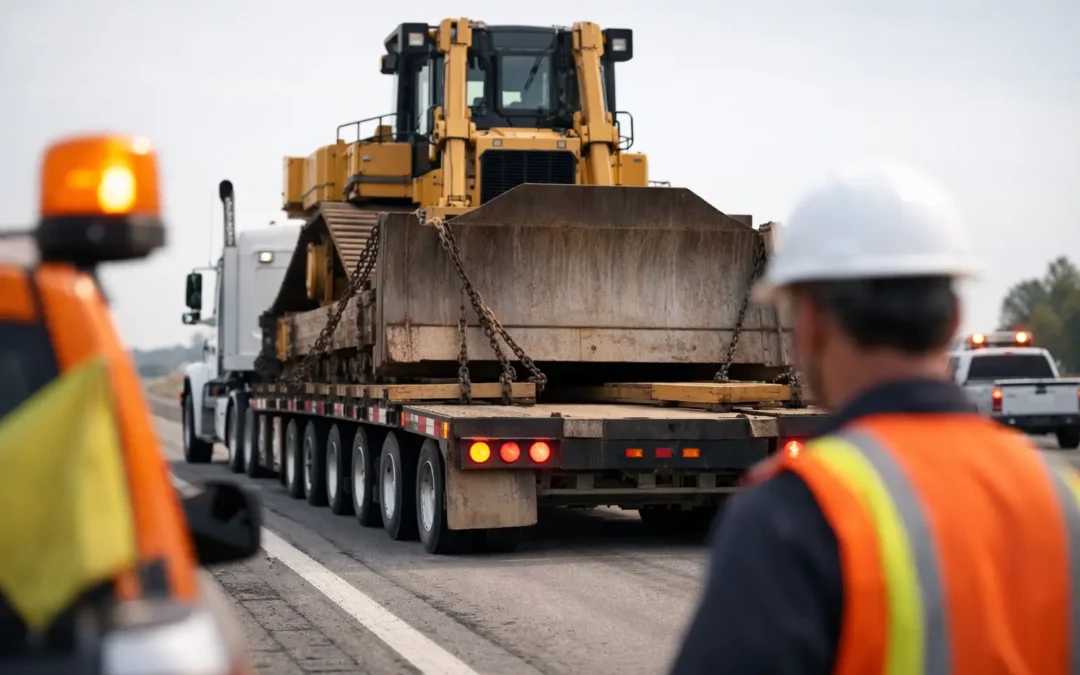
A heavy haul can be loaded, routed, and ready to roll – then stopped by one missing certificate or a permit condition that the insurance policy does not support. Overweight load insurance requirements are not a single federal coverage rule. They are a working combination of state permit conditions, operating authority requirements, shipper contracts, cargo values, and the real exposure created when a truck moves beyond normal legal weight.
For an owner operator or fleet manager, the goal is not simply to show proof of insurance. It is to make sure the policy, limits, equipment schedule, and documentation match the specific load before the truck reaches the scale house or permit checkpoint.
What Makes an Overweight Load Different?
An overweight load exceeds the legal gross vehicle weight, axle weight, or bridge formula limit set for a route. The legal limit is often 80,000 pounds gross on the Interstate Highway System, but axle configuration, state rules, local roads, and issued permits can change what is allowed.
That distinction matters because a load can be legal under a special permit while still creating a substantially different loss exposure. Higher weight affects braking distance, tire stress, bridge and road damage potential, recovery costs after a breakdown, and the severity of third-party injury or property damage claims. A standard commercial auto policy may cover the unit, but that does not automatically mean it satisfies every requirement tied to the permitted move.
Do not confuse overweight with oversize. A load may be overweight, over-dimensional, or both. Width, height, length, and weight can each trigger separate permit, routing, escort, and insurance considerations.
Overweight Load Insurance Requirements Start With the Permit
Each state controls its own oversize and overweight permitting process. A permit may identify the approved route, travel window, axle configuration, gross weight, escort requirements, and insurance conditions. Some jurisdictions require proof of liability insurance as part of the permit process. Others place the responsibility on the permit holder to maintain insurance sufficient for the move.
There is no universal overweight-load liability limit that applies to every state and every commodity. The required amount can depend on the jurisdiction, the weight, the route, whether public infrastructure is involved, and whether the carrier is hauling under a shipper or project owner contract. A port, utility contractor, refinery, construction site, or public works project may require limits above the minimum required to operate under federal authority.
Review the permit before dispatch, not after the truck is loaded. If a permit names an additional insured, requires a certificate with specific wording, or calls for higher limits, your insurance agent needs time to confirm that the policy can meet the requirement. Same-day certificates are useful, but a certificate cannot create coverage or raise a policy limit that was never purchased.
Federal Filings Do Not Replace Permit Compliance
Interstate for-hire carriers generally need public liability coverage that meets Federal Motor Carrier Safety Administration financial responsibility rules. For most non-hazardous property carriers operating vehicles at or above 10,001 pounds, the federal minimum is $750,000 in public liability coverage. Many brokers, shippers, and larger fleets use $1 million combined single limit because it is commonly expected in the freight market.
A BMC-91X filing verifies that required public liability coverage is on file for an authorized motor carrier. The MCS-90 endorsement supports federally required financial responsibility in certain situations. Neither one is a blanket answer to overweight haul requirements. They do not replace a state-issued permit, guarantee that a specific heavy-haul operation is acceptable to the insurer, or provide cargo and physical damage protection.
Coverage That Should Be Reviewed Before a Heavy Haul
The policy review should begin with commercial auto liability. This is the coverage that responds when your driver causes bodily injury or property damage to others. On a heavy haul, a $750,000 limit may meet a baseline regulatory requirement but still be thin for the exposure. A collision involving multiple vehicles, a bridge strike, roadway damage, or severe injuries can exceed that amount quickly.
Cargo coverage deserves the same attention. Motor truck cargo policies are not all written alike. They may include exclusions, sublimits, deductibles, unattended vehicle conditions, theft restrictions, and limits that are far below the value of machinery, components, transformers, steel, or specialized equipment being moved. If a customer tenders a $400,000 piece of equipment and your cargo limit is $100,000, the gap is a business risk even if the load is transported without incident.
Physical damage coverage protects your scheduled truck and trailer against covered collision, comprehensive, and other losses, subject to the policy terms and deductible. Heavy-haul tractors, multi-axle trailers, detachable goosenecks, boosters, and specialized trailers can carry values that are not reflected in a basic equipment schedule. Confirm that every power unit and trailer involved in the movement is properly listed and valued.
General liability can also be relevant when the operation includes loading, unloading, jobsite activity, or contractual obligations outside normal road use. However, general liability is not a substitute for commercial auto liability. The trigger, exclusions, and covered operations are different.
For fleets with meaningful assets or contracts requiring higher limits, an umbrella or excess liability policy may be the practical way to add protection above the primary auto limit. Whether it is available and affordable depends on the carrier’s safety record, radius, equipment, load types, driver experience, and underwriting appetite.
The Policy Must Match the Actual Operation
Underwriters price trucking risk based on what the carrier actually does. Problems arise when the application describes general dry freight but the carrier later begins hauling permitted heavy equipment, specialized machinery, or overweight loads across multiple states.
Tell your broker and insurer about the maximum anticipated gross weight, commodities, equipment type, operating radius, states traveled, use of escorts, and whether the carrier performs loading or securement services. Load securement is especially relevant. A claim involving a shifting load may bring scrutiny of the securement method, driver training, inspection procedures, and compliance with cargo securement rules.
The same applies to hired and non-owned equipment. If a subcontractor, leased owner operator, or rented tractor is involved, clarify who is responsible for the permit, whose insurance applies, and whether the contractual insurance requirements are met. Assumptions in this area become expensive after a loss.
Documents to Have Ready Before Dispatch
A heavy-haul file should be organized before the load leaves the yard. Keep the active permit and route instructions available to the driver, along with proof of commercial auto liability and any certificate requested by the shipper, broker, project owner, or permit authority.
The driver should also have the bill of lading, accurate weight information, equipment details, and contact information for dispatch and any escort provider. If the movement requires a certificate naming an additional insured or showing a waiver of subrogation, verify the exact request against the policy. Do not rely on a certificate issued for a previous job.
For multi-state moves, confirm that each state permit is active and that the route has not changed. A detour that seems minor can put the truck outside the permitted route, particularly around bridges, local restrictions, and construction zones.
Common Gaps That Put Heavy Hauls at Risk
The most common issue is treating insurance as a paperwork task instead of an operational control. A carrier may have an active policy and still face a denial, coverage dispute, contract breach, or uninsured exposure because the load type, value, equipment, or territory was not properly disclosed.
Other preventable gaps include cargo limits below the load value, trailers omitted from physical damage coverage, outdated certificates, and limits that satisfy FMCSA minimums but fail a customer contract. There is also a difference between having a permit and complying with it. Insurance will not erase the consequences of running an unpermitted route, exceeding an axle limit, or moving outside authorized travel hours.
A serious loss can also affect future insurability. Heavy claims, repeated permit violations, or poor inspection history can narrow carrier options and raise premiums at renewal. That is why a clean pre-dispatch review protects more than one load – it protects the carrier’s ability to keep booking profitable freight.
Before accepting the next permitted heavy haul, compare the permit, shipper contract, bill of lading, and insurance schedule line by line. Monarca Trucking Insurance Services can help trucking operators identify whether their liability, cargo, physical damage, and filing setup fits the work they are taking on. The right time to find a coverage gap is while the load is still on the ground.